Websites by trade
Website design examples
What people need to do on museum, church, hotel and other websites, with examples and a test for each.
·

A useful set of website design examples is a short list of sites that do the same job yours needs to do. A museum visitor may want a ticket, a church visitor may need a service time, and a reader may want to buy a book. Try a site with the same task as yours and test it on a phone.
If your exhibition dates change often, check whether staff can update them without help. Then try buying a ticket on a phone. Use the table to find the first test for your own kind of site.
Why does the trade set the site's first job?
The trade decides because each one has a single thing a visitor came to do, and the site fails if that thing is slow. A screenshot shows the type, colour and photos. Try the booking, donation or sales flow to see how the site works.
Colorlib's gallery of website examples by industry groups more than 5,400 live sites into 238 collections across 18 industries. It is a useful place to look, and it answers mostly how a site in your trade can look. It says less about what a site in your trade has to do, which is the question that decides the build.
A museum may need staff to edit an events calendar every week. A memorial site may need a record that stays easy to find for years. Start with the job each site needs to do before you compare templates.
A builder's first job is proof, starting with the licence. Construction websites shows what to copy. A clinic's first job is a booking route patients can trust; Website design for medical clinics shows how it connects and what to keep off it.

Some sites change by the hour and some never change at all. A template sold to both fits neither.
What does each trade need first?
Choose the main task visitors need to complete. The table shows what to connect to the site and how to check that it works.
The independent school enquiry study records how parents can reach a named enquiry or contact choice. The school and university website guide shows what an admissions office needs to check before it asks for a quote.
The table gives examples of visitor tasks, the tools they need and how to test them, as of November 2026. The ticket-purchase and donation thresholds are editorial test targets, not measured results.
| Trade | The site's first job | What it connects to | The test this studio would set |
|---|---|---|---|
| Museum or gallery | what is on, when, and a ticket | a ticketing and membership system | a visitor buys a ticket on a phone in under a minute |
| Church, mosque or temple | the time of the next service | a giving platform, an events list | a newcomer finds the time and the door |
| Charity | the appeal and the donation | a donation platform | a gift goes through in three taps |
| School | admissions and the information parents need | the school's own systems | a parent finds the term dates without calling |
| Author or musician | the book or the record, and where to buy it | retailers, a mailing list | a reader buys and signs up |
| Hotel or lodge | the room tonight and its price | a booking engine | a guest books without leaving the site |
| Winery or maker | the bottle or the object, and the shop | a shop and its checkout | an order goes through on a phone |
| Restaurant | the menu, the hours and a table | a reservation system | the menu loads as text, not as a file |
| Architect or developer | the work, and an enquiry | a project archive, an enquiry form | a client sees three projects like theirs |
| Memorial or family legacy | the record, kept and findable | nothing that needs updating | the site stays correct with no update |
What does a museum or a gallery need?
A museum or a gallery needs a calendar that is right today and a collection people can browse, with a ticket one tap away from both. The calendar changes more often than any other page, so the people who run the exhibitions have to be able to edit it without a developer.
If a public institution is buying a site, its team may need a shared way to score bids. See when to use a website redesign RFP before asking suppliers to price the visitor and ticketing work.
The museum website guide separates the visit, events, tickets and collection records into parts your team can brief. See how storytelling websites guide readers for examples of a route through a story, a choice of cases and a direct list. When a visitor needs to see how rooms or entrances connect, use illustration in the website design to show the route beside the practical details.
The ticket usually lives in a separate system. Tessitura sells museums and galleries a combined system for customer records, ticketing, admissions and memberships. Spektrix sells box office, ticketing and fundraising to theatres and arts venues. The website should take visitors smoothly into the ticketing system. The build therefore starts by checking how the website can connect to that system.
The collection is the second job. A page per object, with its date, maker and one good picture, is worth more to search engines and curious visitors. It serves them better than a carousel, a rotating display of images, on the home page.
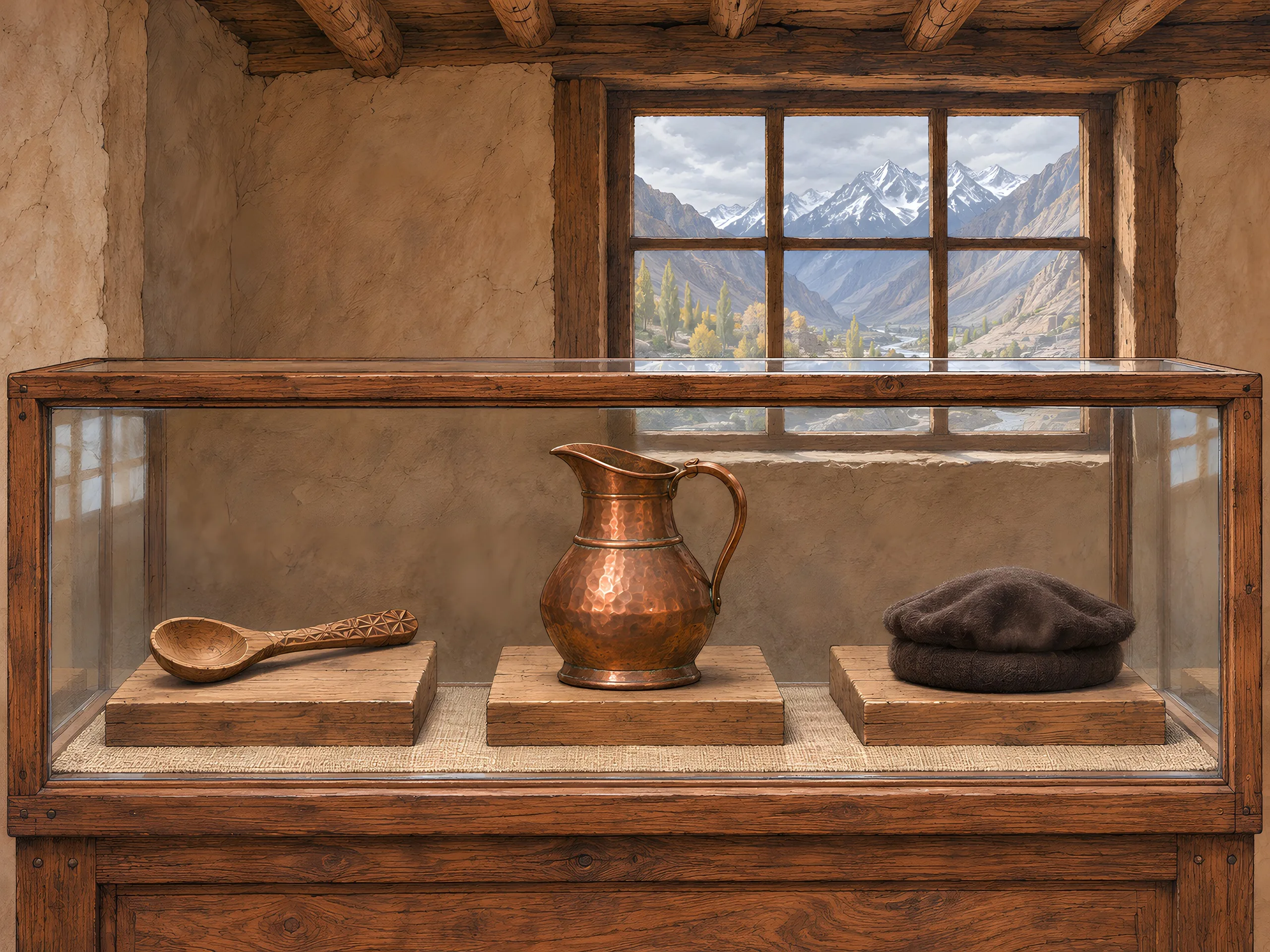
A collection reads best one object at a time, and so does a museum site: a page per object, its date, its maker, one good picture.
What does a church or a charity need?
A church, a mosque or a temple needs the time of the next service on the first screen, and a way to give that works on a phone. A charity needs the appeal and the donation, and a statement of what it is.
Giving tends to run on a platform built for it. Planning Center, a set of church management tools, offers Church Center, an app and website for giving and events. The church website's job is to link to it cleanly rather than rebuild it.
A registered charity in England and Wales has a rule to follow. The Charities Act 2011, section 39 applies to a registered charity whose gross income in its last financial year exceeded GBP 10,000. It says the fact that it is a registered charity "must be stated in legible characters" on the documents it issues to ask for money, and on the others the section lists. Put it beside the donate button as well as in the footer.
When the charity has news, the nonprofit press release template shows the release and how to count what it brings.
What does an author or a musician need?
An author or a musician needs the work, a way to buy it and a way to stay in touch. The buy links go to the shops readers and listeners already use; the mailing list is the one channel the artist owns.
The author website build guide gives the account, book and launch checks for a single author page. See ten author websites for checked examples of reading guides, book links and email signup. The author and musician website guide shows which pages to put in the quote and how to keep a reading order or event list current.
For an ensemble with a season of concerts, the orchestra website checklist covers dates, the ticket link and updates after publication.
A book page carries the cover, a paragraph, the first lines and the retailers. A musician's carries the next dates, a player and the press kit an editor will want at short notice. Both need a page a stranger can understand in one screen. A visitor who searched for a name wants to know at once that they found the right person.
The mistake in this trade is the site built around the artist rather than the work: a long biography first, the books three clicks down. Put the newest work on the first screen and move the biography below it. For more ways to make that first screen count, compare seven real personal sites, each checked the same way on a phone.
Test the sample and buy links on a phone. Make sure each opens the edition or recording listed on the page.
What does a hotel or a winery need?
A hotel or a lodge needs the room, tonight's price and a booking that finishes on its own site. A winery or a maker needs the bottle or the object, a shop and a checkout that works on a phone.
For an estate with both offers, the winery website design guide gives separate tests for the tasting and shop. The hotel and winery website guide shows what goes on a room, tasting or restaurant page and what to check after the booking link.
The booking engine, the system that takes reservations, and the shop are usually bought rather than built. The site's work is everything around them: pictures that show the actual room, the honest distance from the airport, and the policy a guest checks before paying.
A winery selling online has more to settle than a hotel. It must establish who may buy, where it may ship, how old the buyer must be and which licences apply. Settle those with the shop provider before the design starts, because they change the checkout.

A hotel's site is its key board: what is left tonight, and a way to take it before someone else does.
What do architects and developers need?
An architect needs the work shown as projects, each with the problem, the drawings and the finished building. A property developer needs the development: what is for sale, where it stands, and an enquiry that reaches a person.
Both are judged on proof. A client looking for an architect wants three projects like theirs, not thirty in a grid. A buyer looking at a development wants the plot, the plan and the price. A site that hides the price behind a form loses the buyer to the agent who shows it. An agent selling homes meets the same test, with the MLS (Multiple Listing Service, a shared property listings system) rules on top. See real estate websites for realtors.
Write each project as a short case: the site, the brief, the constraint that shaped the building, and the photographs taken after people moved in. A manufacturer has the same need for proof, with specifications in place of projects. Industrial web design sets out the pages.

An architect's site is the model beside the building: the drawing, then the thing that was built from it.
Which trades share a shape?
About two thirds of the forty-six trades in this journal's registry fall into five shapes, and a site built for one shape suits every trade inside it. Schools, architects and the trades of one person, such as photographers, sit outside them.

Different finishes can share the same useful form. Group website examples by the task visitors need to complete.
The calendar shape holds museums, festivals, orchestras and houses of worship. The appeal shape holds charities, foundations and campaigns. The booking shape holds hotels, lodges, restaurants and salons. The catalogue shape holds makers, wineries, publishers and luxury brands. The record shape holds memorials, family histories and annual reports. Firms that sell expertise, such as accountants, law firms and consultants, need a shape of their own, set out in professional services website design.
Some trades also carry rules that no gallery shows. Plumbers are one: several US states require the licence number in advertising, as web design for plumbers sets out. Every maintained school in England "must publish specific information on its website", in the words of the Department for Education's guidance, last updated on 24 October 2024. A public body in the UK has to meet WCAG 2.2 AA, the web accessibility standard, unless an exemption applies.
"Since 23 September 2018 all public sector websites and apps need to meet accessibility standards and publish an accessibility statement."
The Government Digital Service and the Central Digital and Data Office give this guidance in Understanding accessibility requirements for public sector bodies on GOV.UK. The guidance was last updated 30 September 2024.
The shapes that never share are the calendar and the record. The calendar is edited every week; the record never needs editing. Combining the two can leave a memorial site with a blog that goes stale.
For software companies, SaaS website design: what to borrow examines eight real homepages for software as a service (SaaS), software accessed online through a subscription.
What does a site cost by trade?
A site costs what its shape costs, not what its trade is called. At ShepherdUX a Wix or Squarespace site is from USD 2,000. A one-page site starts from USD 2,500, and the Five-page website from USD 4,800, typically to 8,000.
The table shows what each shape usually needs, using the ShepherdUX price list as published in November 2026.
| Shape | Trades | Usual package | From |
|---|---|---|---|
| The record | memorials, family legacy, founder stories | Wix or Squarespace site, or One-page website | USD 2,000 |
| The appeal | charities, foundations, campaigns | Wix or Squarespace site, or Five-page website | USD 2,000 |
| The calendar | museums, festivals, houses of worship | Five-page website and up, linked to ticketing or giving | USD 4,800, typically to 8,000 |
| The booking | hotels, lodges, restaurants | Five-page website, linked to a booking engine | USD 4,800 |
| The catalogue | makers, wineries, publishers | Online shop | USD 6,500, or 7,500 on Shopify |
| Any shape, drawn as a world | museums and brands with a reason to look unlike their sector | Illustrated world | USD 12,000, typically to 30,000 |
The Care plan, USD 150 a month, adds backups, updates, uptime monitoring (checks that the site stays online) and two hours of changes. Every line on the price list, with what moves it, is in what does a website cost, and the packages are set out on the websites page.
How does a build run?
A build runs in six steps, and the trade is settled in the first two, before any design.
Send the brief
Write a sentence on the brief form naming the site you want, roughly when you need it, and the address of any site you have now.
A written reply
The written reply usually arrives within a day. It names the package that fits, what would change the price and which platform suits the site.
A thirty-minute call
You bring what is easier to say than type, such as the ticketing system or the giving platform already in use.
A fixed, written quote
The quote sets out the scope, what is left out and the payment stages. You keep it either way.
Built in the open
You see pages and drawings as they are made, while a change is still small.
Launch and handover
The handover includes your accounts, your code and analytics, tools that measure visits and activity on the site. It also includes Search Console, Google's tool for checking the site's presence in search, plus training and a written guide to how the site works.
A build runs in six steps, from the brief to launch and handover. A trade-specific quote should name the task you will test before launch. A venue might ask to book a seat from its events page on a phone. Use the website redesign proposal checklist to put that test in the quote.
What proof is there?
The proof is the work on the portfolio: a chauffeur service, a water treatment company, a fashion house, a salt shop, a software firm and two publications. The calendar and appeal shapes for museums and churches are argued here from those trades' own systems, the same way any new site of that kind begins.
The linked trade guides explain the visitor tasks, systems and checks for each kind of site.
Firms that sell to other businesses have their own guide in B2B web design, where B2B means business to business.
Who is a trade-built site not for?
A trade-built site is the wrong buy if the site must be cheap above all else, or if you need a team of six from Monday.
Most trades do not need a drawn world. They need a calendar that is correct, a phone number you can read and a page that loads on a bus.
If your exhibitions, services or rooms are already sold through a system you like, do not pay to rebuild it. Pay for the pages around it, and keep the system.
ShepherdUX builds to WCAG 2.1 AA on every package. A UK public body that must meet 2.2 AA should say so in the brief and ask for it in the quote. How to choose a web studio sets out the questions to ask any studio, this one included.
What should a church website include?
The time and place of the next service on the first screen, a way to give that works on a phone, and a page for newcomers. Link to the giving or events platform the church already uses rather than rebuilding it.
What should an author website include?
A page for each book with its cover, a paragraph and the buy links, a short biography and a mailing list sign-up. The mailing list is the one channel an author owns outright.
What makes a good museum website?
A calendar that is right today, a collection people can browse object by object, and a ticket one tap away from both. The people who run the exhibitions must be able to edit the calendar themselves.
What should a restaurant website have?
The menu as text rather than as a file to download, the opening hours, the address and a way to book a table. A menu written as text reads on any phone and to any search engine.
Do I need a custom website for my trade?
Only when the trade's first job needs plumbing a template cannot hold, such as ticketing, bookings or a shop with real stock. A record site or a small appeal can sit well on Wix or Squarespace.
Where can I find website design examples for my industry?
Galleries such as Colorlib's group live sites by industry and show how they look. Read them for the surface, then check whether each example does your trade's first job before you copy anything.
Sources
- Website Examples by Industry, Colorlib Editorial Team, colorlib.com, read 11 November 2026
- Tessitura, Tessitura Network, tessitura.com, read 11 November 2026
- Spektrix: Box Office, Ticketing, CRM Platform, Spektrix, spektrix.com, read 11 November 2026
- Church Center, Planning Center, planningcenter.com, read 11 November 2026
- Charities Act 2011, section 39, legislation.gov.uk, legislation.gov.uk, read 16 November 2026
- What maintained schools must or should publish online, Department for Education, gov.uk, last updated 24 October 2024
- Understanding accessibility requirements for public sector bodies, Government Digital Service and Central Digital and Data Office, gov.uk, last updated 30 September 2024