Platforms and code
Ten Shopify store examples
Ten public Shopify stores show how to help shoppers choose a fit, find the right product or check the details before they buy.
·

A Shopify store is an online shop built on Shopify. Shopify store examples worth studying include Hiut Denim for measurement guidance and Rothy's for style-specific fit notes. Chubbies offers shopping by inseam, the inside-leg measurement. Gymshark uses activity navigation and Death Wish Coffee uses brew format. I checked these ten examples on 12 November 2026 to see how a store can answer a buying question before a shopper chooses.
A shorts buyer needs to know the length. A coffee buyer needs to find a format that fits their brewer. The work starts with naming the question and putting the answer where it helps someone choose.
Write one buying question beside each product or collection before you change the layout.
What did each store answer?
The buying questions cover fit, length, activity, brew format, ingredients and scent, as well as model choice, recipes and country collections. I wrote down the question, opened the public page and checked the words and links that help answer it. I also opened each shop's home page to check for Shopify markers. The sample is a set of examples to learn from. The studio's About page explains how ShepherdUX works.
The checklist below shows the question and what I checked. A pass means the page opened and the named feature was present.
| Store | What it sells | Shopper question | Feature checked | Result |
|---|---|---|---|---|
| Hiut Denim | Jeans | How do I measure for a fit? | Fit and measurement guides | Pass |
| Rothy's | Shoes | What width should I choose? | Fit notes by shoe style | Pass |
| Chubbies | Shorts | How long are the shorts? | Shop by inseam | Pass |
| Allbirds | Tree Runner shoes | Which model is for everyday use? | Model descriptions | Pass |
| Gymshark | Activity kit | Where is the kit for my activity? | Menu by activity | Pass |
| Death Wish Coffee | Coffee and pods | Which format fits my brewer? | Menu by brew format | Pass |
| Partake Foods | Food | Where are the ingredient questions? | FAQ by topic | Pass |
| Flourist | Flour | How can I use this flour? | Recipe with named flours | Pass |
| The Citizenry | Products grouped by country | Which collection is tied to a place? | Shop by country | Pass |
| Beardbrand | Scented products | What might this smell like? | Scent notes and families | Pass |
What makes a good Shopify store?
For these checks, a good store makes the product choice and the information needed to make it easy to find. That is my assessment criterion. It does not show whether a store sells more. Shopify's store examples offer more stores to study for navigation, product descriptions and product photography. Use this checklist when looking at your own shop:
- Navigation: can shoppers find the product group that matches their task?
- Product descriptions: do the words answer the question beside the choice?
- Product photography: do the images show details shoppers need to compare?
How can I find Shopify stores in my niche?
Start with your product category, then compare stores that need to answer the same buying question. Browse Shopify's store examples by category to find shops selling related products. Use the comparison table above to separate what a shop sells from how it helps someone choose. A shared category is a starting point. Look for a shared decision too: length for shorts, brewer format for coffee, or ingredients for food. Write down the question each example answers, then check the relevant product page. Keep the useful detail tied to the products your own shop actually sells.
How do stores help shoppers choose a fit?
Hiut Denim, Rothy's and Chubbies show three ways to explain fit: measuring guidance, style-specific notes and shopping by inseam. I checked these features on 12 November 2026.
Hiut Denim gives its fit guides a place in the menu and offers a separate guide on measuring. A shopper can look up how to measure before reading a product page. Keep the measurement link near the place where size is chosen, too. That gives someone arriving from a search the same help.
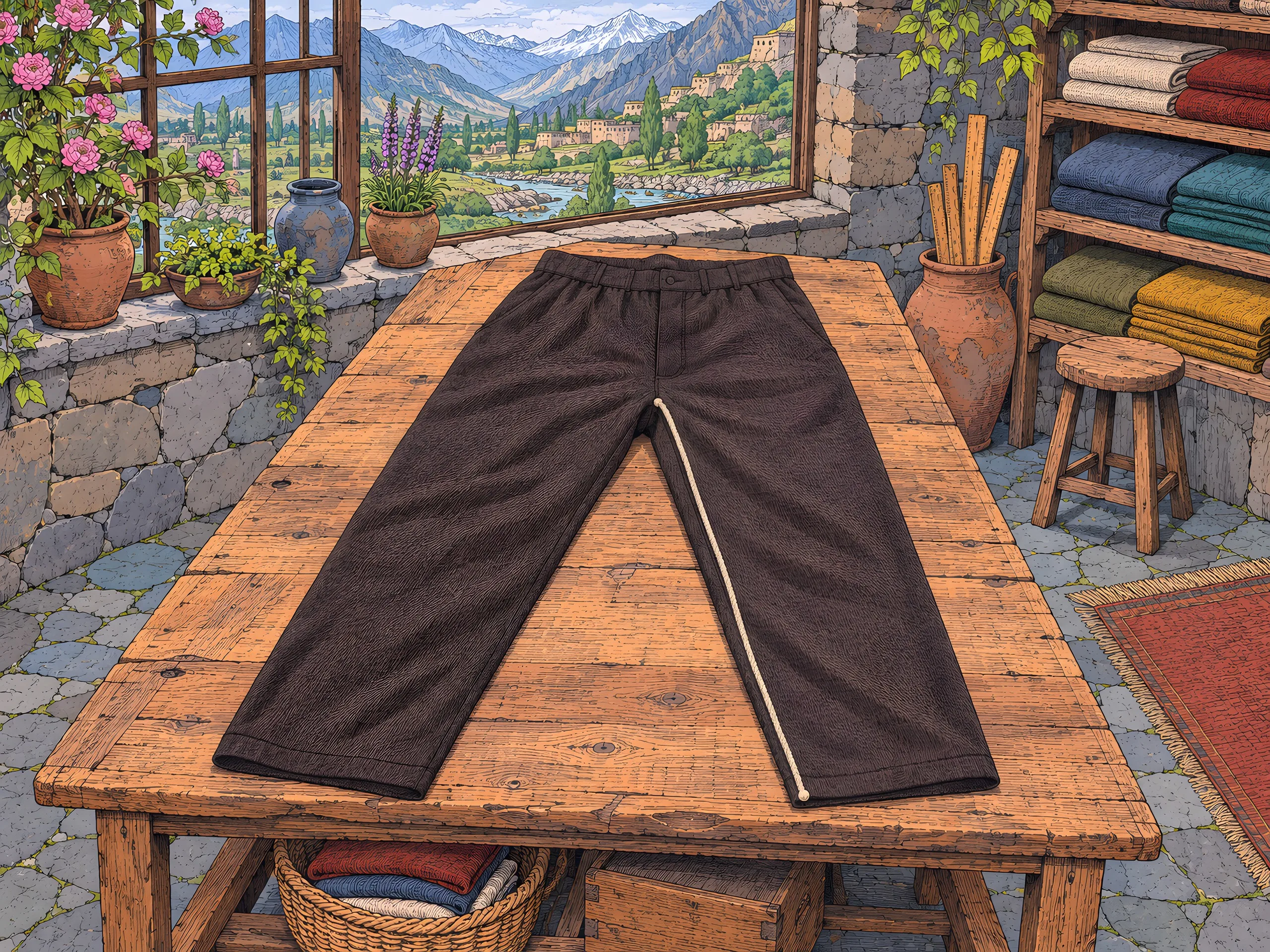
The cord makes the measurement's endpoints clear. Show shoppers exactly where each useful measurement starts and ends.
Rothy's fit guide gives notes for individual shoe styles. One shoe can fit differently from another. The guide gives the shopper a place to check that difference. If your store sells products from different makers, write the fit note for the actual style.
Chubbies makes length a way to shop. Its page groups shorts by inseam, the distance along the inside of the leg. That saves a step for someone who knows the length they want. Make the label clear and show how the length is measured.
How do shoppers find the right product?
Gymshark, Death Wish Coffee and Allbirds organise choices around activity, brew format or model. I checked these features on 12 November 2026.
Gymshark lists activities such as running, lifting and Pilates in its menu. Someone looking for kit for a task can start with the activity and then choose the item. Add an activity group only when it gives the shopper a selection that fits the name.

Different tasks call for different basket shapes. Group products by use when that changes what someone needs to buy.
Death Wish Coffee groups coffee by brew format, with routes for ground coffee or whole beans and for single-serve pods. A shopper can choose by the equipment they have. If your products fit different tools or machines, put that choice where it is easy to see.
Allbirds gives related Tree Runner models their own descriptions on one page. A model name by itself tells a first-time buyer little. A short description can show what makes each model useful. Put the detail people compare beside the model name.
What details help shoppers decide?
Partake Foods, Flourist, The Citizenry and Beardbrand explain details through ingredient answers, recipes, country collections or scent notes. I checked these features on 12 November 2026.
Partake Foods groups product and ingredient questions in its FAQ (frequently asked questions). A shopper has a route to the information they came for. Put the details you can verify on the page where someone needs them. Keep the label and current product information as the reference for a specific item.

These example materials suggest scents a photograph cannot convey. Describe verified notes for the actual product.
Flourist names the flours used in its sourdough recipe. A reader can see how the products are used together. One real recipe or method can answer a question a product photo leaves open.
The Citizenry gives shoppers a way to browse collections by country. A place name makes sense when a collection is tied to a real place. If you have checked the product's origin or maker, name it in text on the product page as well as the home page.
Beardbrand lists scent notes and a scent family. A picture shows the bottle, and the words give the shopper an idea of the smell. Name the information people cannot get from the photo.
Where does the information need to work?
Put the information that helps shoppers choose on product pages as well as on the home page. A shopper can land straight on a product page from a search, an email or an old link. If you have a guide, give it a link people can share. Check that the product and the guide still use the same names when one is updated. The website design examples by trade show how to choose the first task for a different kind of site.
Use the Shopify migration scope guide when you need to agree which details are carried into a new shop. A fit chart needs dimensions for the actual item. An activity collection needs products someone can use for that activity. A recipe needs the names of the products it uses. Set a person to check those details when the catalogue changes, and give them the list of pages where the details appear.
Open one product page from a search or a saved link. Ask someone to find the main choice with no help from the home page.
What do the checks tell you?
All ten example pages opened and contained the feature described above when checked on 12 November 2026. I used 5 home pages. The other 5 example pages were guides, a collection, a recipe or an FAQ.
The numbers describe where I looked in this sample. Each shop can use several ways to answer a buying question.
This is what the public page checks cover.
| Check | Number | What it means |
|---|---|---|
| Stores with Shopify markers | 10 | Markers in the home page code |
| Home page examples | 5 | A choice or link on the shop home page |
| Dedicated page examples | 5 | A guide, collection, FAQ or recipe |
| Example pages with the stated feature | 10 | The visible words or links were present |
I did not measure how fast people found the answers or what the examples did to sales. You can use the ideas in a test of your own shop. Choose one task, then see whether a real shopper can finish it without help. Save the starting page and the outcome so the team can repeat the check.
What would I change first?
Start where customers get stuck before they buy.
- Identify a recurring question your team answers about fit, use, delivery or returns.
- Find a product page where the answer is hard to see.
- Put the answer beside the choice.
- Open the page directly on a phone and check it.
- Keep a record of the questions that still come in after the change.
If you are planning a move, check the Shopify relaunch steps. A change to the layout can keep the same product names, useful links and buying details.
This is the kind of check the studio can use in ecommerce design work. If the problem is one label or one missing detail, start there and test it before paying for a larger build.
Before adding an SEO (search engine optimisation) app to fix search, check what the theme already writes. The theme is the template that controls your shop's layout and features.
What are good Shopify store examples to study?
Hiut Denim and Rothy's show ways to explain fit. Gymshark and Death Wish Coffee group products by how shoppers use them. Flourist shows a product in use through a recipe.
How can I improve a Shopify product page?
Choose one question shoppers ask before buying and put the answer beside the product choice. Test it by opening the page directly on a phone.
Do I need a custom Shopify theme to use these ideas?
A product description, collection, guide link or FAQ can often be added within the theme you already use. Check whether your current theme can show the answer where someone makes the choice.
When a theme runs out of room, Headless CMS for ecommerce, compared compares the content systems that sit beside Shopify.
Sources
- Hiut Denim, Rothy's Fit Guide and Chubbies inseam collection, checked 12 November 2026.
- Allbirds Tree Runner collection, Gymshark and Death Wish Coffee, checked 12 November 2026.
- Partake Foods FAQ, Flourist sourdough recipe, The Citizenry and Beardbrand, checked 12 November 2026.
- ShepherdUX public page checks, 12 November 2026. Ten home pages with Shopify markers, ten checked features and five examples on dedicated pages.
- 50 Best Shopify Stores to Inspire Your Own (2026), Shopify, shopify.com, published 2 December 2025, date read 15 November 2026.
- Shopify Ecommerce Store Examples, Shopify, shopify.com, date read 15 November 2026.