Getting found
Media kit examples: what to include and why
Explore media kit examples by purpose, see what each section does, and use a practical checklist to build your own.
·

When a journalist asks for your media kit before a deadline, they need news, a short fact sheet, pictures they may use and a person to ask. Advertisers need audience figures and rates; music bookers need recordings, photographs and a booking contact. ShepherdUX opened nine media kit examples on 15 November 2026, three for each reader, and each group carried its own reader's list.
The press rooms all named a person to ask, the advertiser kits all gave audience figures and rates, and all nine left upcoming event dates off the kit page. Each group is taken apart below against the same fourteen sections, then a labelled ShepherdUX demonstration kit shows what was kept, what was cut and why.
Which kind of media kit do you need?
You need the kind made for whoever asked. A media kit is a set of ready-made facts, pictures and contacts that lets someone write or decide about you without a round of emails, and this entry looks at three uses of the name:
- A press kit is for journalists: who you are, what is new, pictures they may use, and a person to ask.
- An advertiser media kit is for buyers of advertising space: who reads you, how many, and what each placement (advertising slot) costs.
- An electronic press kit (EPK) is for venues, festivals and reviewers booking or covering a performer: the music, photographs and a booking contact.
Mixing them makes each one worse. A journalist does not need your rate card (your list of advertising prices), and an advertiser does not need your founder's story. A brand with no advertising to sell needs the first kind. Earned media vs paid media explains what a journalist can choose to cover, and How a small site gets found places press work beside the rest of being found.
What makes a media kit example useful?
A useful kit answers its reader's questions without needing a reply. Each kit was marked against fourteen sections that kit guides commonly list. The table counts them by group, in the pages opened on 15 November 2026.
| Section | Press rooms (3) | Advertiser kits (3) | Musicians' kits (3) |
|---|---|---|---|
| About paragraph | 2 | 3 | 3 |
| Fact sheet or summary | 2 | 3 | 3 |
| Leadership biographies | 1 | 0 | 0 |
| Logos to download | 0 | 0 | 1 |
| Photographs to download | 1 | 0 | 3 |
| Video | 1 | 0 | 2 |
| Recent releases or news | 3 | 0 | 0 |
| Press coverage | 0 | 0 | 1 |
| Audience figures | 0 | 3 | 1 |
| Advertising options or rates | 0 | 3 | 0 |
| Brand or usage guidelines | 0 | 1 | 0 |
| Press or booking contact | 3 | 0 | 3 |
| Music or performance clips | 0 | 0 | 2 |
| Upcoming event dates | 0 | 0 | 0 |
Each group covered its reader's first questions and skipped the rest. The advertiser kits from Current, The Conversation and Georgia Magazine gave audience figures and rates, and named sales contacts rather than press contacts. Issue deadlines in the advertiser kits are publishing schedules, not events, so they are not counted as event dates. The limit of this count: it covers the pages opened on the day, not every file each owner keeps.
What would be in a media kit for journalists?
A journalist's kit needs news, a short fact sheet, pictures and a person to ask. The three press rooms belong to old companies: Aston Martin's media site, Lavazza Group's news and media page and Steinway & Sons' press information. Two lead with recent releases and a contact; Lavazza keeps its media relations contact inside a linked results PDF.
Steinway's page puts a named press contact, with an email address and phone number, above its releases: the best first screen of the nine.
What they leave out is as telling. Lavazza and Steinway keep their company facts inside a news release rather than on a separate fact sheet. A journalist must open a story to find a founding year. Logos to download did not appear in the pages opened on 15 November 2026, though Aston Martin's media library loads its files by script and may hold them.

A bell within reach. A kit's first job is a person to ask, and every kit for journalists or bookers in the sample gave one.
For a heritage brand, start with a person to ask, a paragraph about the company and a short fact sheet. Follow with current news, then photographs and logos in sizes a printed page can use. Press release distribution costs covers the news half of that list.
What should be in an artist press kit?
An artist press kit should include music, photographs and a booking contact. The three musicians' kits were the most complete for their reader.
Michael Lander's press kit, updated on 29 September 2026, offers a download of about 7 MB (megabytes). The page lists 17 high-resolution press photographs and black and white logos. It also lists a stage plot (a diagram of the performance setup) and a technical rider (a list of equipment and technical requirements). It opens with a line that sums up the whole form:
"Everything a venue, festival or reviewer needs on one page."
Michael Lander, Press kit, updated 29 September 2026.
Jonah Ridgely's kit adds a playlist of performance videos and a list of notable appearances. Siyuan Kang's is a short biography, a download of headshots and a contact.
The three kit pages left out upcoming dates, though Lander's site lists them on a separate Shows page. For a booker deciding whether a performer is active, the next three dates are the strongest single fact, and a kit is the place to put them. Author and musician websites covers the rest of a performer's site.
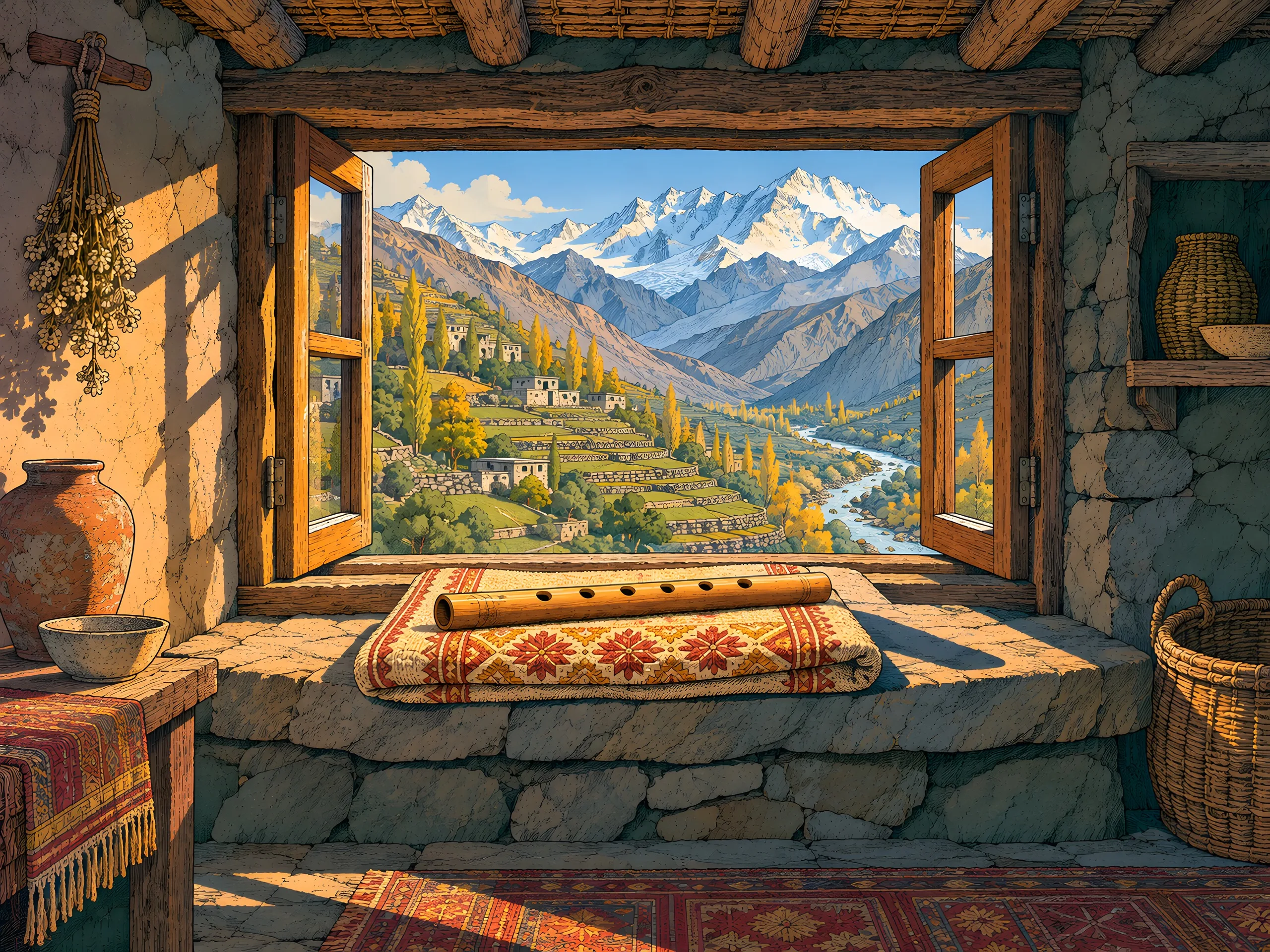
The instrument itself. For a performer the recording is the fact sheet, and two of the nine kits linked music or performance clips.
What can you learn from a worked media kit example?
A worked example shows what to keep and cut for one reader. ShepherdUX built this labelled demonstration kit for itself on 15 November 2026, for a journalist writing about small design studios; it has not been sent to anyone.
| Section | Decision | Why |
|---|---|---|
| About paragraph | kept | the About page's first sentence does the job |
| Fact sheet | kept | the founding year is not confirmed for this kit, so it is left out, not guessed |
| Founder biography | kept, short | two sentences, not a CV |
| Logos | kept | four locked marks and an icon, in dark and light |
| Photographs | kept, flagged | one founder photograph, likely too small for a large print |
| Video | cut | no video was ready to offer |
| Releases or news | cut | the kit has no announcement to carry |
| Press coverage | cut | an empty "as seen in" strip reads worse than no strip |
| Audience figures | cut | they serve an advertiser, not a journalist |
| Advertising options | cut | the site sells no ad space, and this kit is for journalists |
| Brand guidelines | kept | the brand board, in night and day versions |
| Contact | kept | the contact page, with email and WhatsApp |
| Music | does not apply | not a performer |
| Upcoming event dates | cut | no events to list |
Seven sections were kept: a paragraph and a short fact sheet about five people working across two continents answer most first questions. The cuts are the lesson. 259 visitors in 90 days, measured on shepherdux.com on 15 November 2026, is an honest audience figure and of no use to a journalist.

Packed for one reader. What stays out of a kit is a decision written down, not an accident.
The one kept section to grow is the photograph: one founder portrait, 1080 pixels square, measured on this site on 15 November 2026. It is sized for screens, so a larger photograph for print is the first addition.
Should your media kit be a PDF or a website page?
Make a web page first, with the files to download from it. Seven of the nine kits were web pages. The best linked a PDF (a document with a fixed layout) or a zipped set of files (files packed into one download). These let anyone forward the kit.
Two of the three advertiser kits were PDFs, which suits buyers who pass a kit to a colleague. Current's media kit runs to 15 pages, effective from 1 January 2026.
What does not work is a gate. A tenth kit, Royal Enfield's media kit page, was opened and left out of the count. It is for accredited media, meaning media representatives approved for access. They must register and wait for their application to be approved. A journalist on deadline will not wait for approval; they will write without your pictures.
How much does a media kit cost?
A media kit costs mostly time, if the parts already exist. Assembling the ShepherdUX demonstration kit needed no new design work, because the logos, the brand board and the facts were already written down.
If the logos and photographs do not exist, they are the cost. Design and build prices, line by line sets out what a logo and brand job includes. A photographer's day for portraits and product shots is the other likely cost, best booked before a launch rather than after a journalist asks.
If the kit also needs news to carry, a release is a separate piece of work: ShepherdUX's press release service writes one and sends it on your date.
What should you check before sharing your kit?
Run five checks before the link goes out:
- A named person: a name, an email address and a phone number on the first screen.
- A date: when the kit was last updated, so a reader can trust the facts.
- Files that open: logos in dark and light, and photographs large enough to print.
- One paragraph and one fact sheet: facts a journalist can paste without rewriting.
- No gate: the kit opens without a form, a login or an approval.
Michael Lander's kit passes all five on the page's own description, though its download was not unpacked here. Its upcoming dates sit on a separate page, where a booker has to look for them. When your kit is ready, How to write a media pitch email covers the message that carries its link.
What is a media kit?
A media kit is a ready-made set of facts, pictures and contacts about a company, publication or performer. It lets a journalist, advertiser or booker write or decide without asking for each piece.
What is the difference between a media kit and a press kit?
A press kit is a media kit made for journalists: news, facts, pictures and a press contact. Publications also use "media kit" for an advertiser document of audience figures and rates.
Do I need a media kit if I sell no advertising?
You do if journalists might write about you. A press kit page with a contact, a paragraph, a fact sheet and downloadable logos and photographs saves them a round of emails.
Sources
- Aston Martin media site, Aston Martin, media.astonmartin.com, read 15 November 2026
- News and media, Lavazza Group, lavazzagroup.com, read 15 November 2026
- Press information, Steinway & Sons, steinway.com, read 15 November 2026
- Media kit 2026, Current, current.org, effective 1 January 2026
- Media kit 2026, The Conversation, theconversation.com, read 15 November 2026
- Georgia Magazine media kit, University of Georgia, news.uga.edu, read 15 November 2026
- Press kit, Michael Lander, mlandermusic.com, updated 29 September 2026
- Electronic press kit, Jonah Ridgely, jonahridgelymusic.com, read 15 November 2026
- EPK, Siyuan Kang, siyuankang.com, read 15 November 2026
- Media kit page, Royal Enfield, royalenfield.com, read 15 November 2026, excluded
- Lavazza Group FY2025 financial results release, Lavazza Group, lavazzagroup.com, 30 March 2026
- Steinway & Sons announces Upstate Pianos as exclusive Capital Region dealer, Steinway & Sons, steinway.com, 31 August 2026
- ShepherdUX demonstration media kit and the nine-kit count, measured on shepherdux.com on 15 November 2026